

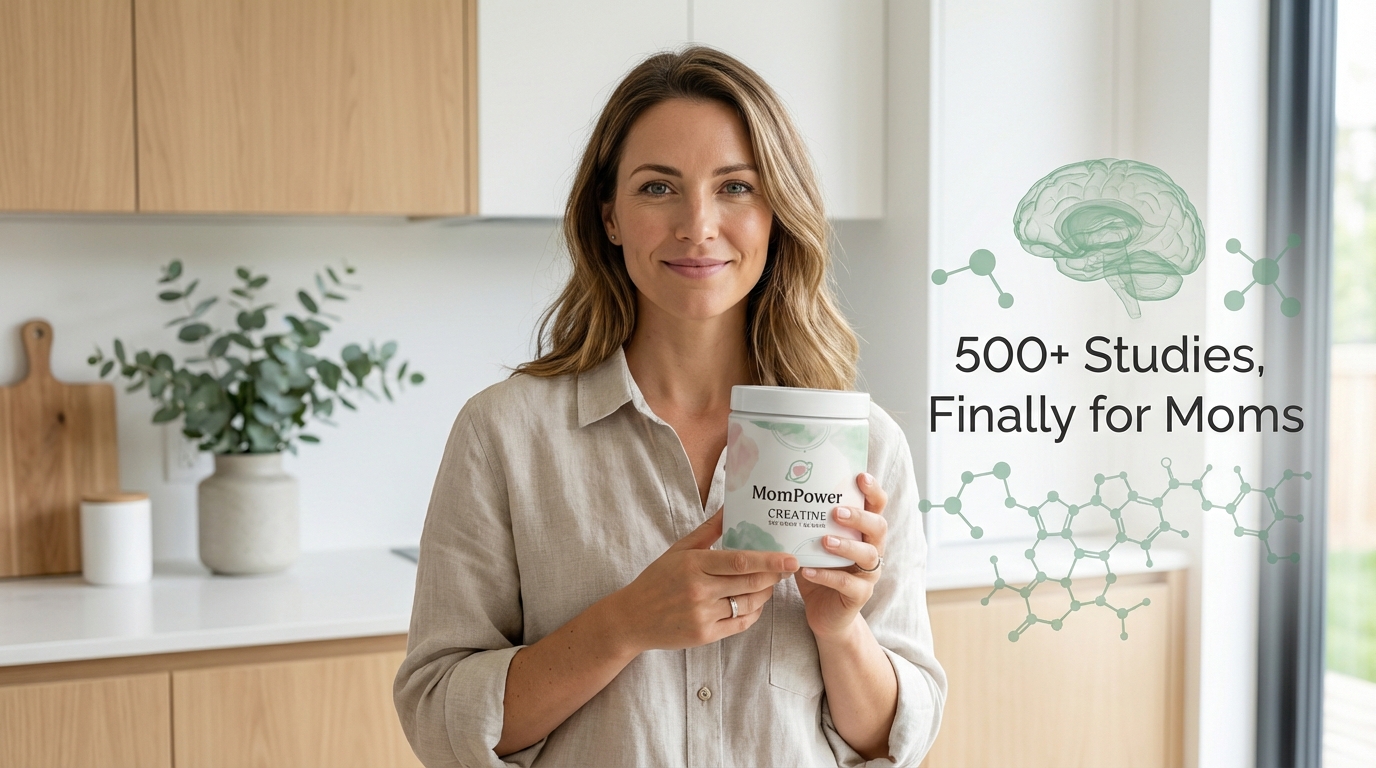
Creatine for Moms: What the Research Actually Says
By OrbitStore Team
Creatine monohydrate is one of the most studied supplements in the world. The International Society of Sports Nutrition has called it the most effective ergogenic nutritional supplement available to athletes for increasing high-intensity exercise capacity and lean body mass. That much is well established.
But MomPower is not a sports brand. We are selling creatine to mothers for cognitive support. So the honest question is: what does the evidence actually look like for that use case?
The basics first. Creatine is a natural compound your body produces from amino acids. It is stored primarily in muscle tissue and the brain. Its main role is helping cells regenerate ATP, the molecule that powers nearly every process in your body. When your cells burn ATP for energy, creatine donates a phosphate group to rebuild it. This happens billions of times per second, especially during periods of high demand.
Your brain is one of the most energy-hungry organs you have. It accounts for roughly 20% of your resting energy expenditure. When energy supply dips, cognitive function tends to follow: slower reaction times, weaker working memory, difficulty concentrating.
This is where the research on creatine and cognition gets interesting. Several studies have looked at creatine supplementation under conditions of sleep deprivation and mental fatigue.
A 2018 review published in Experimental Gerontology examined the evidence for creatine and cognitive function across multiple studies. The authors found that creatine supplementation showed the most consistent benefits when subjects were under stress, whether from sleep loss, mental fatigue, or aging. Under normal, well-rested conditions, the effects were less pronounced.
A study from 2006 in the Proceedings of the Royal Society B found that creatine supplementation reduced the negative effects of sleep deprivation on cognitive performance. Subjects who took creatine and were then sleep-deprived performed significantly better on tasks involving complex processing than those on placebo.
For vegetarians and vegans, the picture is even clearer. Because creatine is found naturally in meat and fish, people who do not eat these foods tend to have lower baseline creatine stores. Supplementation in vegetarians has shown more pronounced cognitive improvements, suggesting that the brain benefits most when stores are being topped up from a deficit.
Now, the caveats. Most of these studies were conducted on healthy adults in controlled settings, not specifically on postpartum mothers. There is no large-scale clinical trial that says "creatine supplementation improves cognitive function in sleep-deprived mothers." We want to be straightforward about that.
What exists is a logical chain: creatine supports brain energy metabolism, sleep deprivation impairs cognitive function partly through energy deficits, and supplementation appears to reduce those impairments in controlled studies. Mothers experiencing chronic sleep deprivation and cognitive fatigue fall squarely into the profile that research suggests would benefit.
We also want to flag the safety question. Creatine monohydrate has an excellent safety profile in healthy adults at standard doses (3 to 5 grams per day). The ISSN position stand confirms no adverse effects have been documented at recommended dosages. However, if you are pregnant or breastfeeding, the research is limited. There are no high-quality human studies confirming safety during lactation, even though creatine is a natural component of breast milk. We always recommend consulting your doctor before starting any supplement, especially during pregnancy or while breastfeeding.
The bottom line: creatine is not a magic pill. It will not replace sleep or solve the structural challenges of early parenthood. But the evidence for its role in supporting cognitive function under stress is real and growing. If you are a mother dealing with brain fog and fatigue, it is worth a conversation with your healthcare provider.
We built MomPower because we believe this research deserves a product and a brand that makes it accessible to the people who could benefit most. Not bodybuilders. Not athletes. Moms.
This article is for informational purposes only and does not constitute medical advice. Always consult your healthcare provider before starting any new supplement.
Continue reading
Related posts
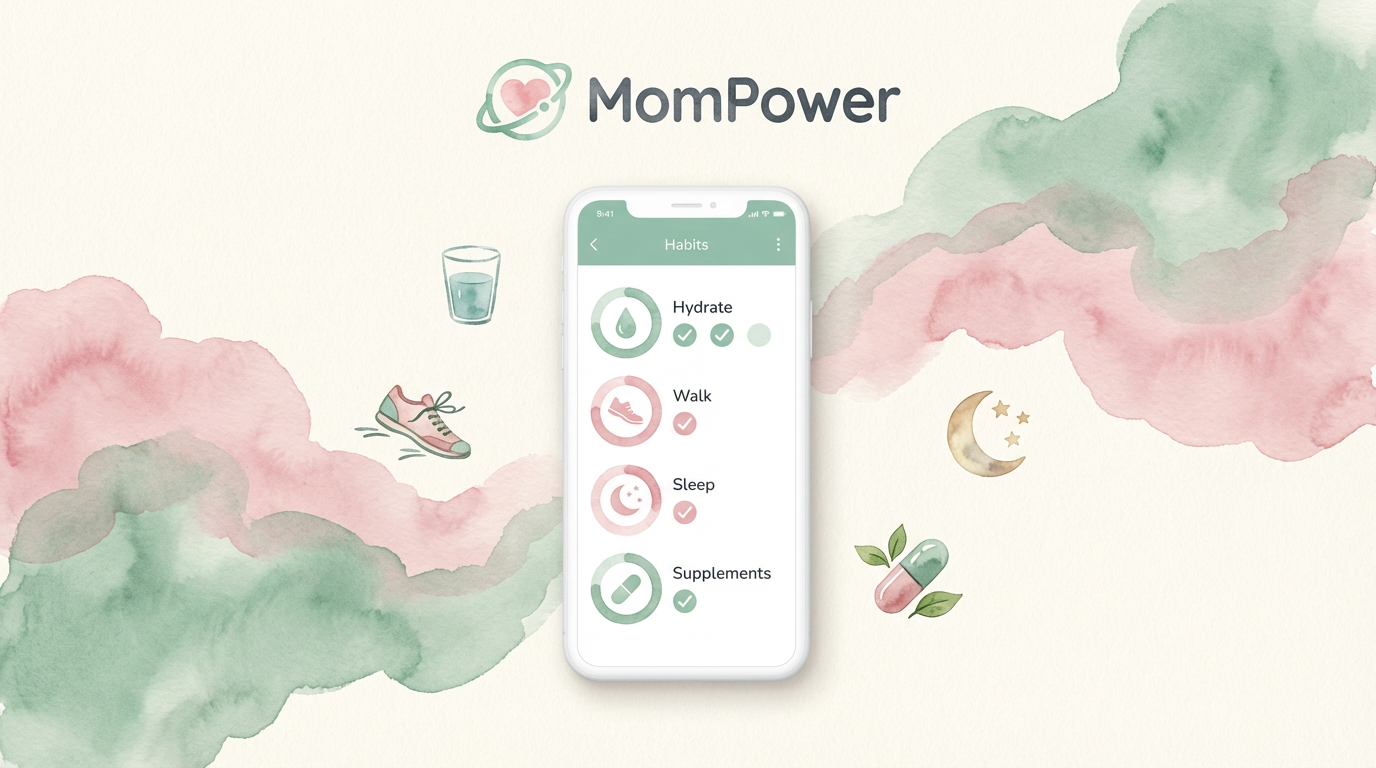
The MomPower Habit App: What to Expect
A companion app for MomPower customers that turns your daily creatine routine into a trackable habit with health data, challenges, and streaks.

Why We Built MomPower
We launched our first sub-brand to solve a problem nobody in the supplement industry was talking to the right audience about.